I'm Alex Kearney. I work on Artificial Intelligence and Epistemology.
I'm Alex Kearney. I work on Artificial Intelligence and Epistemology.
I’m not sure what it is, but I find even the way I think changes when I have a pen in my hand. It’s one of the reasons why my lab note-book is still a book rather than a tablet. 📚
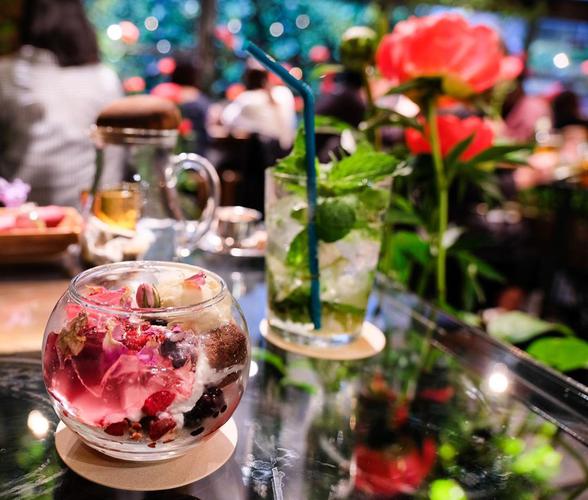
I was wandering around Shinjuku looking for food and found this little flower shop with a tea house in the back 🍵 I ended up waiting in line for over an hour, but it was totally worth it. The parfait has rose jam and edible flowers, and the mojito was one of the best I’ve had. Of course, sitting in a little indoor garden probably helped, too 🌿 . . . . #tokyo #japan #travel #travelphotography #yummy #foodporn #explore #flowers #food #foodphotography
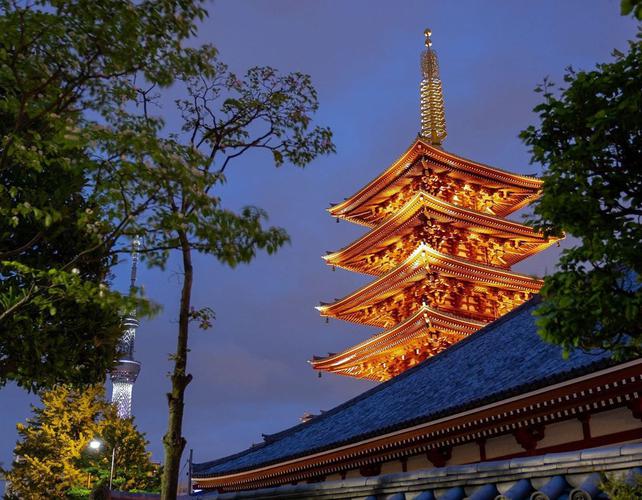
The pagoda at Sensō-ji with the Tokyo sky-tree peeking through the trees. A mixture of the old and the new.
A nice side-effect of new Game of Thrones episodes while I’m traveling: I’m encouraged me be present in the moment and not look at twitter for fear of being spoiled.
One of my favorite kinds of people watching when I’m traveling is observing selfie-taking. It’s fun seeing the difference between how people hold themselves when they know they’re going to be seen, and how they relax afterwards.
I say this with full self-awareness. My family doesn’t just want to see where I’ve been, they want to see me there!
This morning, I opted to do something familar: to retread my steps and go back to the renoir for a cup of coffee.
Afterwards, I trekked out to harajuku. I found the famous street and ambled along. Even at 9 A.M. it was already heaving. The streets were bursting at the seams although much of the street was closed.
I have to admit, while some aspects are wild---e.g., rainbow toasties---the street was otherwise unremarkable.
I focused on brahms path and confirmed a suspicion: it is named after the composer. Trundling down brahms path, Being one street removed, really changed the feeling. Even the smell of lush plants growing on the sides of buildings was nice. I charted out the places I wanted to visit and let interest guide me. When I found something unusual or mundane, I let that impulse guide me.
I found so many neat streets---interesting nooks and crannies. I went to a little coffee shop next to shinjuku. It had low ceilings and beautiful heavy wooden seating. I ordered a slice of cake and a pourover.
The couple sitting next to me seemed pleasant. They commented on my choice of cake. We started to chit-chat and I found out that they were from California, from SanFrancisco. One of them did arts and life reviews and commentary.
We chatted about their career, and the sustainability of the arts community in a city being crowded out by tech. They asked me what I did, and I mentioned I was a grad-student studying AI. One of them worked at GoogleBrain. You can never escape. There is no holiday.
This is a big day; it's the end of an era: an imperial era!
I went to Roppongi hills and wandered around a graveyard. A woman on a bicycle rounded the corner and pushed up the hill. A collection of pigeons emerged out of nowhere and followed her---a cloud.
As I was looking for a place to find coffee, I walked by a park with some homeless youth. what struck me was their organization. They were spot-cleaning their clothes, blotting then carefully with small towels.
Every now and then, I worry that I'm spending too much time on trip advisor, or the like---I'm focused too much on finding where to go and not enjoying where I am. I should be thinking around what's around me.
I ended up going to zozo-ji and exploring the mausoleum of tokigawa shoguns. I felt out of place in the small courtyard. There were no western tourists. It was peaceful watching people pray. A handful of the visitors bowed and prayed at select, specific shoguns.
Up at the temple's main hall, many people were lined up to bring incesnse to their forheads and sprinkle it into a burning pile in a bowl.
I was surprised by how gilt the temple was. It was almost as gold as a spanish church; however, it wasn't overwhelming. I think this is because the temple was restrained with its decoration and ornamentation: while select statues were complex, the room as a whole was minimalistic.
Also, I turned a corner and found an elevator. Could you imagine an elevator being retrofitted into a historical church? I don't believe I've ever seen one. When I found the elevator---an anachronism---it struck me how these spaces play a functional role for a large number of people. These temples are spaces that are designed with a practical purpose.
Most people non-religious people in japan pray at shines or private altars, although they don't identify as shintoist in surveys. You can see this in how vibrant the communities are around shines. There were so many families and young adults practicing their religion. At small shrines I walked by on the way to the temple, there were so many people casually stopping to pray.
In the evening, I went to a more popular Senso-ji: an ancient buddhist temple. It is one of the most popular temples in Tokyo to visit.
Droves of people. All of them milling about. I was overloaded with the sounds of people rattling sticks to find their fortune, the sound of people throwing their coins as an offering into massive slatted boxes before bowing in prayer.
While I had my tripod out taking shots of the temple two groups of men came up to me and started chatting. The first man was clearly off. With my chunky camera and travel tripod, I stick out. I was respectful about where I placed myself, making sure not to block the throngs of people moving by. I did stick out visually, though. The first man was maybe in his forties and hovered around me. He cracked jokes---introducing himself as 'Johnny Depp' and photo-bombing---but also silently stared at me in the distance. Something seemed wrong.
Later, a pair of men came up to me: one much older than the other and with far fewer teeth. They told me some things that I didn't quite catch, and the younger of the two suggested I return after dusk for better photos. The two asked to take a photo with me and continued milling about the area. When I bumped into them again, the older of the two gifted me a boar key-chain. I think it was because they saw me offer to take a photo for a family.
It's strange how two similar interactions can diverge for seemingly minor reasons.
Roppongi Hills → Tokyo Tower → Zōjō-ji → Sensō-ji
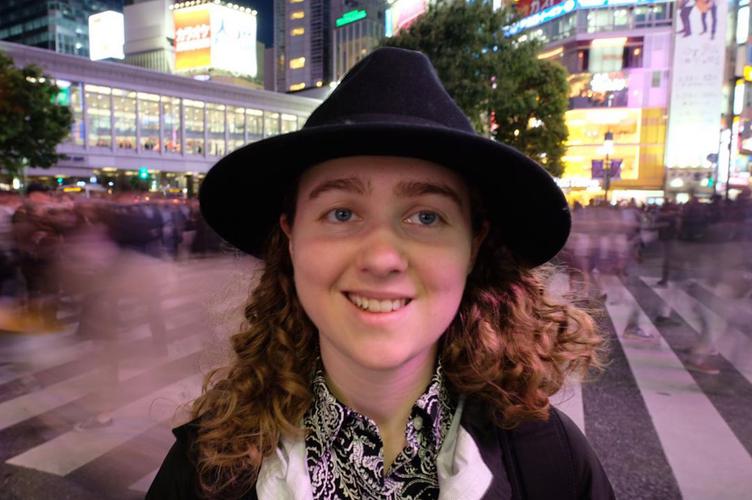
Shibuya Crossing is one of the busiest crossings in the world. People pour into the scramble from all directions, zig-zagging frantically as they all meet in the center of this vast intersection.
We woke up early to go to Odaiba: an artificial island filled with amusement parks and expo halls. The train to the island had a wonderful view; we dipsy doodled east, crossing a bridge over to the island. Through the dockside cranes you could catch glimpses of mount fuji: a little triangle on the horizon slightly obscured by particulate and capped with snow.
We were on the island to see the Team Epsom Digital Art Museum a concept piece that dwells on themes of nature and industry. We entered into a dark room that erupted into an open space covered in butterflies. There are no maps: there is no set path. We discovered each installation by exhaustively searching through a maze of hallways. I'm still not sure if we managed to even find all the installations.
The first room I found was my favourite: The Nest. You entered by climbing across a rope cat-walk down into a net. We were suspended in the dark above a mirrored floor, giving the impression that you're floating in an endless abyss. Lying down in the nest, you could see a mass of what looked like stars, all flickering in the void.
Once everyone was settled, a few glyphs moving and changing emerged from the darkness. Shapes and sounds whirred around, giving the feeling that you were warping through space and tine.
Getting lost in the museum was immensely satisfying. The whole labyrinth really imparted a sense of wonder. The meticulous sound-scaping and darkness of the museum created a complete, immersive experience.
What caught me the most was how they played with your perception by creating complex projections onto irregular spaces.
Each of the rooms had to be discovered. Subtle cues in the hallways alluded to the presence of another room---for instance processions of sedans of animals marching down the hall.
In the back of one of the rooms, obscured by a sheer curtain, was a tea-house. Using carefully arranged projectors, the chaisu's were decorated with blossoms that slowly blossomed in your tea as you drank it. ONce you finished, or if you disturbed the projection enough, the blossoms blew away.
It was beautiful to watch the cup with the froth---almost as interesting as watching the rest of the room discover their tea. There was a small child sat on a guardian's lap, helping herself to a bowl of matcha icecream. Although the room was dark, you could just barely catch her expression in the reflected light of a field of grass crowing around her icecream bowl.
The space was inspiring.